Showing posts with label Human Rights. Show all posts

Tuesday, September 15, 2015

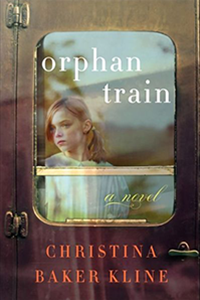
Orphan Train - a novel by Christina Baker Kline

 Orphan Train - a novel  by Christina Baker Kline

orphanNon-fiction and historical fiction reading for young adults has improved greatly in the last few years.  The variety of books that try to portray actual events throughout history offer so many perspectives for so many different kinds of readers.  Some of the most recent I can think of off the top of my head include, The Kite Runner by Khaled Hosseini, The Book Thief by Markus Zusak, Between Shades of Gray by Ruta Sepetys, and Tangled Threads: a Hmong Girl's Story by Pegi Deitz Shea.  These don't even include many great realistic fiction books that help build reader empathy as characters have to deal with challenges of life such as poverty, bullying, physical and cognitive disabilities, and other social issues.

In the book Orphan Train, author Christina Baker Kline combines two characters and their stories simultaneously to explain the history of the Orphan Trains in America during the 1920s, and the social dilemma of being a teenage orphan in 2011.  Seventeen year old Molly Ayer is all too familiar with the social service system. She is a juvenile delinquent, most recently for stealing a book, and probably in danger of being relocated into another foster home. Her sentence is to serve community service, cleaning the attic of ninety-three year old Vivian Daly.  Vivian is also familiar with the social service system in her day.  As an orphaned Irish immigrant, Vivian was placed on the Orphan Train on the east coast, and was sent to America's growing midwest region with the hopes to finding a safe home, and possibly a family.

These two unlikely friends eventually develop trust in each other. They begin to share their experiences as participants in the social system of their time. Kline intertwines the past stories of Vivian's life as an orphan in 1930 with the present day predicament of Molly Ayer.  The reader begins to see a change in both characters, as they become dependent on each other, Vivian trying to curate the events of her past, and Molly her present and future.


Friday, December 13, 2013

I WONDER Who the Next Amazing Character Will Be?

Wonder by R.J. Palacio - I can't help but wonder what I would have done if I would have met a character like August Pullman.  I have read a lot of books in the past few years, and I am happy to say that this isn't the first time I have been pulled into a character like I was as I read, Wonder by R.J. Palacio. I still wonder what happened with Donald Zinkoff in Jerry Spinelli's book, Loser.  I wonder how long the legacy of Petey Corbin stuck to the people who were able see inside his severely handicapped body in the book, Petey by Ben Mikaelsen. I wonder if Melody found her real voice in the book, Out of My Mind by Sharon Draper. Finally, I can't leave out Kevin in Rodman Philbrick's book, Freak the Mighty. I am sure that I am missing other great characters and other great books.  I hope some of my readers get personally into the characters of their great books the way I was able to hang with August Pullman and his family.

August Pullman is severely deformed.  That might be an understatement. He has a severe case of what is called, Mandibulofacial Dysostosis. R.J. Palacio doesn't describe the extent of his handicap right away, leaving the reader to wonder, "How bad could it be?" Auggie is going to to middle school for the first time.  If there was anywhere that courage is tested, it would be in middle school, especially since up until this time, Auggie has been home schooled by his overprotective mother. Auggie has the love and support of his family to see him through this new adventure where potential bullies and friends mix together testing not only Auggie's courage, but the courage of his family, and anyone who dares to see through his severe deformities.  The unique style of Palacio depicting the effects of living with a brother and friend like Auggie, makes the reader reflect within, searching for their own empathy and wondering, "How would I react if I met Auggie for the first time? Could I be a friend like that?"

Tuesday, September 3, 2013

Can We Take Living In America For Granted?

Behind the Mountains by Edwidge Danticat:
I have read a lot of books about refugees from countries that are torn by war and political strife.  Vietnam, Germany, Russia, the Middle East, and various African nations are just some of the regions that have become the setting for popular young adult novels in recent years.  This summer I  had the opportunity to read a few books about refugees from Haiti and Cuba. Learning about the political history of some of the countries in the Caribbean was a eye opener.  I am familiar with the published history book versions.  The books I read gave me a perspective into the hardships of families surviving political turmoil, the desire to move to the Untied States to escape persecution, and the sometimesunderhanded role the United States may have played in the region. This often times leads to new hardships in a country that was supposed to be so full of promise.


Monday, June 17, 2013

Surviving Some of the Most Extreme Forms of Human Suffering

There are many good books that depict what the Holocaust was like for Jews in Europe during World War II. Prisoner B-3087 by Alan Gratz is based on the true story of ten year old Jack Gruener, a Holocaust survivor of 10 different concentration camps. Jack's story tells of the atrocities faced by prisoners of the Nazis during their occupation of Poland, Czechoslovakia, and eastern Europe. Jack, whose real name is Yaneck, survives the work and death camps knowing that one unlucky move will most certainly end his life. Also knowing that his family is dead, and the suffering is more than any human should have to endure, Jack has to continually push himself to live; that no matter how bad each moment may seem, life is better than death.


Friday, June 7, 2013

Hmoung Fiction Depicts Troubled History and Possible Futures

Tangled Threads: A Hmong Girl's StoryFor years there has been a growing number of Hmong students in classrooms across the United States, and Oshkosh is no exception.  Many of them are very quiet, very hard working, and very respectful to teachers.
Tangled Threads: A Hmong Girl's Story by Pegi Deitz Shea allows the reader to understand the cultural pressure put on young Hmong children to respect their elders, work in the home, and honor their ancestral heritage, no matter what.

Friday, May 17, 2013

Henry Golde: Holocost Survivor Visits Merrill Middle School

On Friday, May 3, Holocost survivor, Henry Golde, paid a visit to Merrill Middle School in Oshkosh, Wisconsin.  Henry, now 84 years old, sat alone in a folding chair behind a microphone on the stage in the middle school gymnasium before a captive audience of over 400 middle school students and staff to retell the story of his five years of captivity at the hands of Nazi Germany during World War II. Henry, as tactfully a survivor of one of the most horrific experiences in history can, recalled some of events and conditions of his experience in captivity.  He concluded with a heartfelt message to the students of ending hate in the world and to learn to forgive.  Henry Golde also promoted the autobiography of his story in the book, Ragdolls, which was made available to students and staff for signing.

Thursday, March 28, 2013

A True Story of Survival in Cambodia's Killing Fields

Never Fall Down by Patricia McCormick is the true story of Arn Chorn-Pond, a survivor of the war in Cambodia, and one of the worst examples of genocide in world history, known as the Killing Fields. As a young boy, Arn enjoyed many things that were available in the country in 1975.  Rock and Roll music, American movies, and ice cream were the norm until the communist government called, the Khmer Rouge, took over the country, forcing everyone into violently run work camps, separating families, destroying villages, and eventually killing millions.

Through fate and Arn's will to survive, he falls into an opportunity to be one of the favored prisoners of the Khmer Rouge through his musical talents, even though he didn't know how to play a single note. Being faced with the option of either play or die, Arn chose to play, and to be the best.

Arn experiences many of the atrocities of war first hand while a prisoner and child soldier of the Khmer Rouge. During his fighting with against Vietnamese army, Arn is able to escape to Thailand where he is placed in a refugee camp.  While there, survival and Arn's drive to be the best gets him noticed by an American missionary who takes Arn and a couple of boys back to America.  Unfortunately Arn can not escape his violent past. As he tries to adjust to his strange new country, ghosts of his past keep him from settling into his new home peacefully. In the end, Arn learns to trust his new family and adapt to life in America while eventually becoming the spokesperson in America about the homeless children still suffering in Cambodia.

I was disturbed by this book at times, because of the amount of violence portrayed by the author.  I had to keep reminding myself that as bad as it appears, reality was probably worse. Some things can not be put into words, but Patricial McCormick certainly tried.  With this in mind, I'm not sure this book is appropriate for everyone.

Here is my dilemma.  How can I promote a book with such a serious story to be told, yet it might contain content too disheartening for my students?  What do you think I should do?