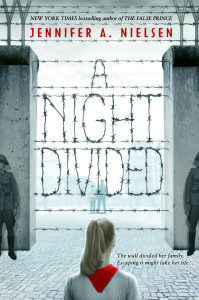
 In middle and high school social studies classes, a lot of focus is put on the the two world wars and the first half of the 20th century. Once in awhile I come across a book that covers these events from a new perspective. Many stories of the battles, torment, and survival of the great wars are written and shared in young adult literature. Some are the works of nonfiction, shared by characters and authors that experienced the tragedies of war first hand. Many other great stories fall under historical fiction. Even though the characters are not real, they are confronted with authentic storylines that have been researched by authors. These stories can only be shared in fiction since many of the original characters have since passed away, or their real names, or complete story were never known. The only way to share the context of some of these horrific events in terms for young readers is through young adult fiction. A Night Divided by Jennifer A. Nielsen is a new book that I can add to my list. In order to understand the story, a short history lesson is needed.
 |
| East Berlin border guards add barbed wire to the top of the Berlin Wall |
A Night Divided is a story about Gerta Lowe and her family. They lived in East Berlin at the end of World War II. As part of the Treaty in Europe, Berlin, the capital of Germany, was divided into four regions. Since France, Great Britain, the United States, and Russia were the leading countries of the allied powers, each controlled a region. Russia had a different idea of what should happen to Germany and Europe at the end of war. Promoting Communism throughout eastern Europe, Russia separated themselves from their western allies. These differences brought political strife to the region, and almost took everyone back into another world war. The term, Cold War, was given to the time period between the end of World War II, and 1991 when the Communists in the Soviet Union fell from power.
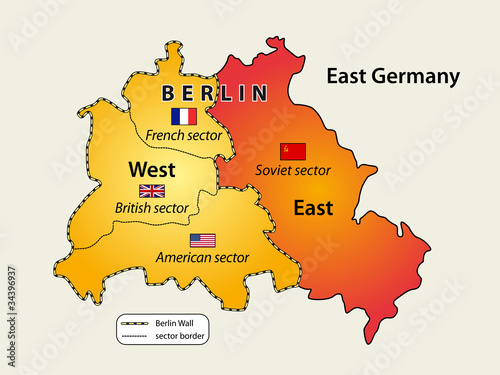 |
| The Berlin Wall was not meant to keep the West in. It was meant to keep anyone from Germany or East Berlin out. |
Gerta's dad is a member of a resistance group in East Berlin. This is a group that did not agree with the Communist government of the Soviet Union. So when the Soviets decide to build a wall around West Berlin, it just so happens that Gerta's dad and brother are trapped in the West. Even though twelve-year-old Gerta was sheltered from her father's illegal activities, his strong will was not. Gerta did not believe that the government of the Soviet Union and East Berlin should have so much power over their free will. Gerta heard about the opportunities in the West, and nobody is going to stop her dream of being free.
 |
| This picture of the Berlin Wall and Death Zone shows the distance that Gerta was expected to dig in her attempt to be free. www.telegraph.co.uk |
I enjoyed Nielson's book, A Night Divided, because of it's fresh look at the events of World War II. There are many books about the Holocaust and the battles of the war. This book takes different perspective on how the conditions of peace after World War II lead to more turmoil in Europe. The story about the Berlin Wall is one that may be left on the shelf as history classes need to curate what makes the curriculum and what might not. As technology changes how students research their topics, maybe there will be a resurgence of interest in topics like the Berlin Wall and the Cold War.